
Indiana law states that early voting in the 2023 municipal elections could start on Wednesday, Oct. 11. Check out this link to a pamphlet produced by the Indiana Secretary of State’s office to view all Indiana the election dates and deadlines for 2023.
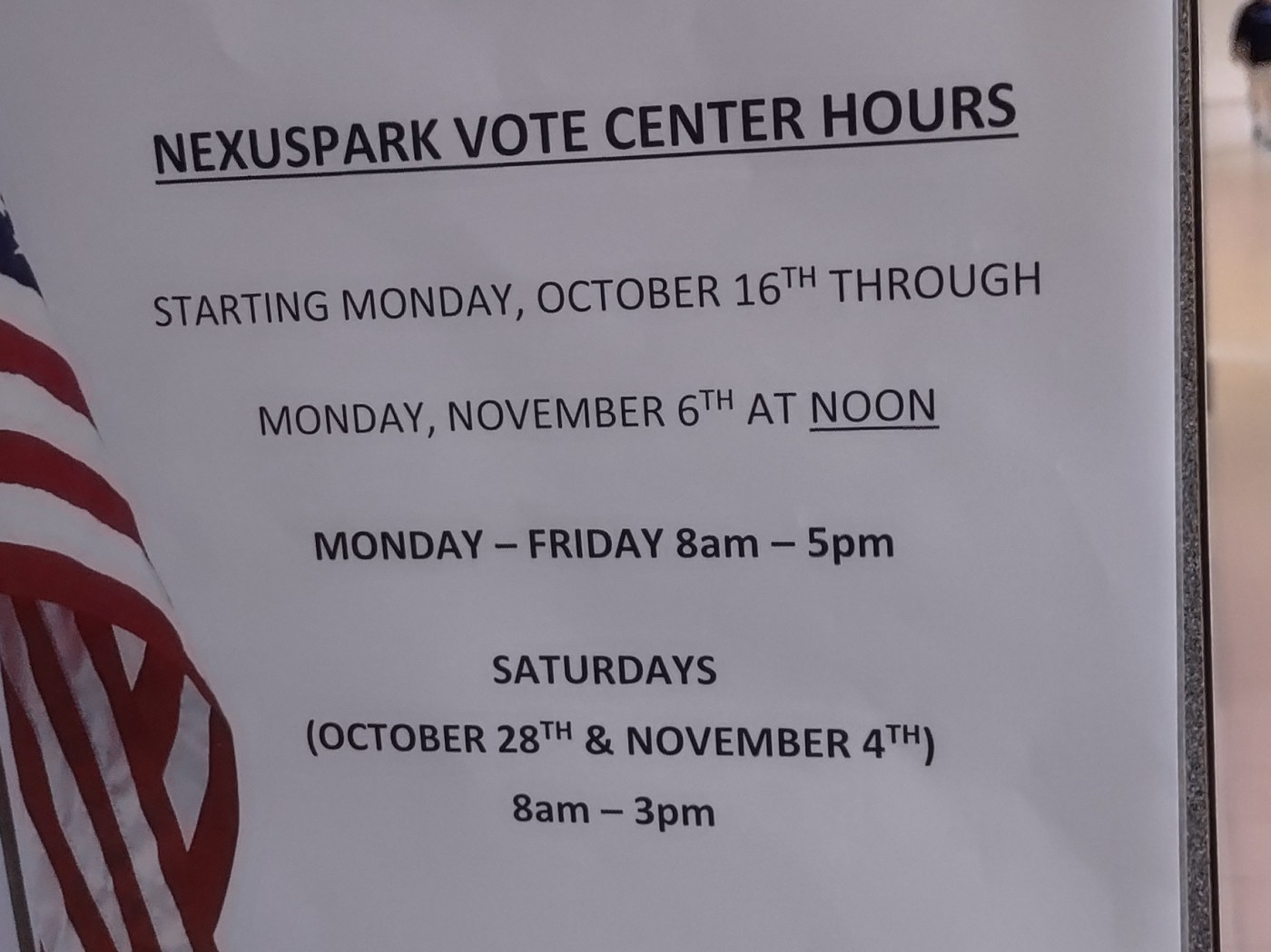
Early voting in Columbus didn’t start on Oct. 11; it started on Monday, Oct. 16, a decision that came from the mayor’s office. As far as I can tell, every other municipality in the state started early voting on the day it was allowed to start.
It’s not illegal for a city to limit the number of dates for early voting. But you’d think that a city that shrunk its early in-person voting period would have a mighty good reason. The mayor’s office told the Bartholomew County Election Board that not starting when the rest of the state did would save us money, and not all that many people vote early anyway. Let’s take a look at those.
Early voting, whether in-person or via mail, has been increasing across the country since before the COVID pandemic. Starting in 2006, early voting in this country rose steadily from about 5% of the total votes cast to 26.2% in 2020. So, it should be no surprise that the trend continued here in this fall’s election. A total of 482 people cast ballots during the first four days of early in-person voting at Nexus Park, compared to 190 during the first five days of early in-person voting for the 2019 municipal election, according to the Bartholomew County Clerk’s Office.
Still, even if early in-person voting would have been at 2019 levels, what would the harm be in opening when everybody else did?
Had to be the cost.
I mean renting space at Nexus Park, renting or buying voting machines, paying poll workers for an additional three days. That’s got to add up.
Well, the city owns Nexus Park. We’re not paying ourselves rent. So no cost there by opening up Oct. 11.
Oh, and we purchased the voting machines years ago. Not to mention, the cases for the voting machines were given to us. So no cost there by opening up Oct. 11.
That leaves it up to poll workers. It’s got to cost a ton for the city to pay poll workers for three additional days’ work. Let’s do some elementary mathematics. Five poll workers, who make $16 per hour for three days. That adds up to … drum roll please … $2,280.
Really? That’s all? A little over two grand is what a city with a 2024 budget of $109 million can’t afford?
Hmm … that’s odd. Don’t you think?
So what was the real reason we didn’t get to start voting when everybody else did?


Leave a Reply