What are the topics local people are most concerned with?
In order, according to Hoosier Action, a nonpartisan, independent community organization based in rural and small-town Indiana, Columbus-area residents’ biggest concerns are:
- Housing, which encompasses the topics of affordability, homelessness, and landlords
- Drug overdoses and its partner issue, mental health care
- Low wages/disparity in wages
- People feel they have little to no agency in making decisions that affect their lives
We talked about these topics, and more, when I met with representatives of Hoosier Action on Aug. 29.
These are some heavy hitting topics without simple fixes. But if we work together, we can ease them one step at a time. Let’s look briefly at each topic, while understanding there is so much more to them than what can be presented in this space. Note that I will be talking in more detail about these, and other topics of concern, as we move along.
Housing
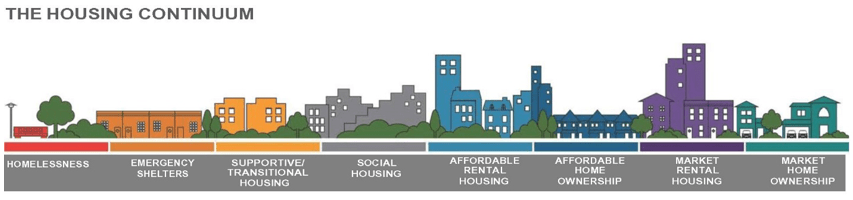
We do have an issue with enough affordable housing (defined by the U.S. Department of Housing and Urban Development as housing where the occupant is paying 30% or less of the gross income on total housing, including utilities). We need to incentivize developments that address this. The city has just OK’d a housing study, which I believe will confirm this.
Homelessness has become more of an issue lately. You may think it’s just the people you see asking for money at busy intersections. But we also have people camping out near Haw Creek as well as people who are living out of their cars. I see them on my morning walks. Organizations such as Lincoln-Central Family Neighborhood, Brighter Days, Horizon House, the Columbus Township Trustee, churches, and more, provide various a wide array of services to the unhoused. Some people don’t take advantage of these services, but for those who do, they still don’t have many places they can go for shelter during the day. We also need a supportive housing program. Supportive housing is permanent, affordable housing with on-site support services to serve the needs of the most vulnerable population, including homeless individuals and people with disabilities. Typically, apartments are rent-stabilized, and buildings are owned and operated by experienced community organizations that maintain a high standard of property management. With many homeless (certainly not all), mental health issues are a contributing factor, so those needs must be addressed in those cases.
We also need to hold landlords accountable for their actions, or lack of actions.
Drug overdoses
The best way to prevent drug overdoses is to prevent drug misuse and addiction to begin with.
Early use of drugs increases a person’s chances of becoming addicted, according to the National Institute on Drug Addiction. So, preventing early use of drugs or alcohol may go a long way in reducing these risks. Also, risk of drug use increases greatly during times of transition, whether for teenagers or adults. But because the brain is still developing during adolescence, using drugs at this age has more potential to disrupt brain function in areas critical to motivation, memory, learning, judgment, and behavior control. Research- or evidence-based programs can help prevent drug addiction in youth. So, we need such programs.

Mental health issues play a part in many addictions. Removing the stigma from mental health care goes a long way in helping people desire to seek that sort of care.
The cost of some prescription drugs is so high that people sometimes self-medicate with other drugs (some produced illegally) and end up getting addicted to the replacement. We need to keep the price of legitimate medicines down.
The opioid crisis shined a bright spotlight on the fact that people can easily become addicted to prescription meds, too. We need to remain vigilant in making sure the medicines prescribed are safe to use.
Emergency medical personnel and officers of the law need to carry Narcan, a nasal spray used to treat an opioid overdose emergency. Many do.
We also need to get over the notion some have that people who overdoes deserve it. Everyone who needs hep deserves to be helped.
Wages (low and disparate)
The value of the federal minimum wage has reached its lowest point in more than 50 years, according to an Economic Policy Institute analysis of Consumer Price Index data released last July. A worker paid the current $7.25 federal minimum hourly wage earns 27.4% less in inflation-adjusted terms than what their counterpart was paid in July 2009, when the minimum wage was last increased, and 40.2% less than a minimum wage worker in February 1968, the historical high point of the minimum wage’s value.
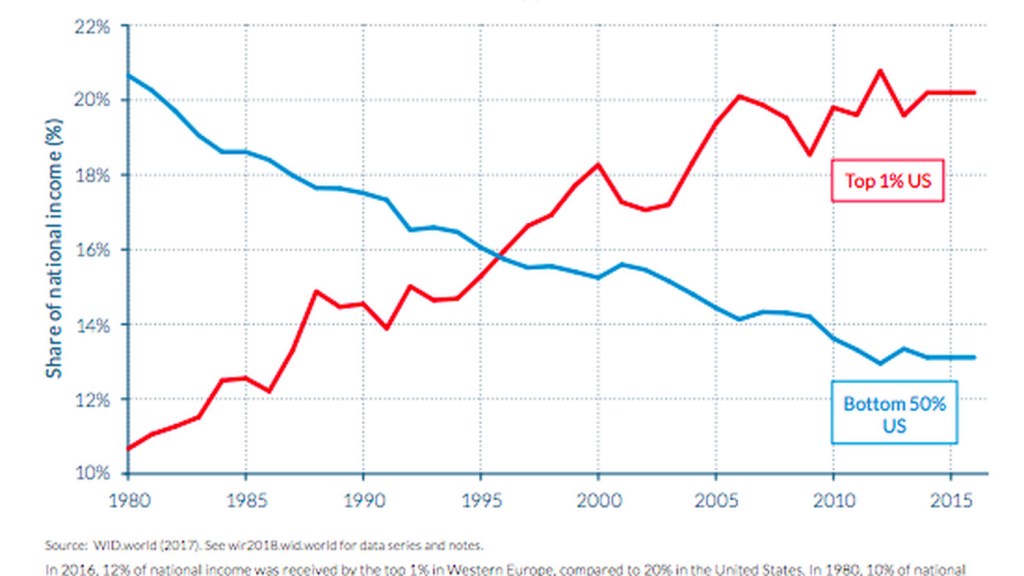
Adjusted for inflation, the February 1968 minimum wage of $1.60 per hour would have been worth $12.12 in July 2022. Yet, minimum wage today still stands at $7.25.
The combination of a stagnant minimum wage (this is the longest period in history without an increase in the minimum wage) and rising costs to consumers (food, fuel, housing, transportation, etc.) have destroyed the purchasing power of those jobs.
These factors have also severely impacted those who are making above minimum wage. The shrinking middle class has seen its purchasing power sapped, too.
The term “living wage” refers to a theoretical income level that allows individuals or families to afford adequate shelter, food, healthcare, regular savings, and other basic necessities. The goal of a living wage is to allow employees to earn enough income for a satisfactory standard of living and prevent them from falling into poverty.
So, what’s a living wage in Bartholomew County? The average single, childless adult in Indiana needs to earn at least $17.24 per hour to qualify for a “living wage,” according to MIT’s Living Wage calculator. So, a federal minimum wage of $15 an hour may not sound so far-fetched now.
The disparity between upper management and CEO pay (including bonuses, stock options, etc.) compared to hourly employees’ pay has skyrocketed in the United States.
There are also pay gaps among genders and races.
The city council can’t change the federal minimum wage. But it can entice companies that pay good wages to operate here.
People feel they have no say
I get why people don’t feel their voice in heard in government. The people elected to represent you don’t seem to listen to you. Or you don’t feel as though you know what’s going on.
I’ve been in the same place, and I’ve figure out that it’s a two-way street.

The more effort I put into knowing what’s going on in my community, the more I understand why government officials do what they do (though I don’t always agree with them), the more I feel engaged, and the more I feel that my representatives actually listen to me. Now, getting them to do everything I want is another story completely…
My advice to people who feel a disconnect with their elected officials is to seek more information. Read your local newspaper, check out the government websites such as the Columbus city website or the Bartholomew County website. Check out the different boards, commissions, and committees. Pick out one meeting a month that might be of interest and just listen.
Pay attention to what people who are in office or are running for office are saying, not just whether they have a “D” or an “R” after their name. Do their votes and views seem to make sense for the community? If so, vote for them.
I did say this was a two-way street. So those running for office or who are in office need to make an effort to reach out. They should talk to the local newspaper, so you can read what they have to say. They should respond to requests for information in a timely manner.
As a city council member, I will look into the best forms of communication with the residents of Columbus. Does that mean newsletters emailed to your in-box? Does it mean an occasional direct mail postcard? Does it mean a bigger presence online? Maybe all of that. We’ll see.
In the meantime, let’s focus on the issues that really matter to our local residents and figure out the best ways we can make a difference locally.

