
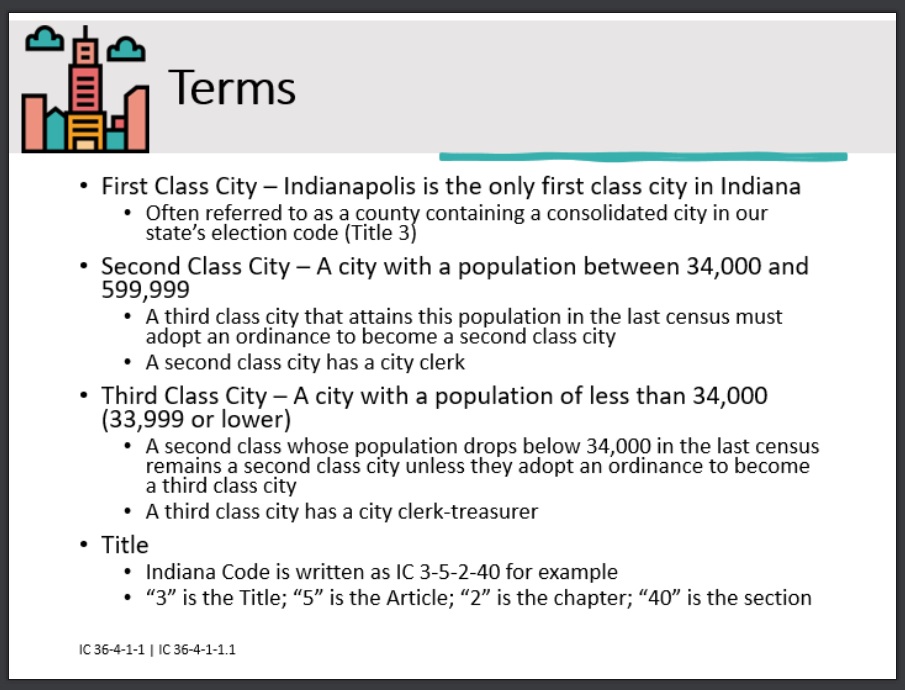
Cities in Indiana are classified as either first-, second-, or third-class cities.
The majority of Indiana’s cities are designated as third-class and have a city council and clerk-treasurer as part of their government. There are also second-class cities that have populations of over 35,000 but no more than 600,000, which have a city council and elected clerk. Indianapolis is the only first-class city in the state.

Cities don’t have to change classes just because their population warrants it; the city must pass an ordinance to change. For example, Westfield’s city council voted to remain a third-class city in 2022 after crossing the population threshold to make it eligible to move up.
Columbus has been a third-class city for a long time but has now been designated a second-class city.
Changing classes means a few things for Columbus. For example, the city council currently has seven members, but the size of that body will increase by two in 2024. This fall, one council member from each of six districts will be elected, as will three at-large candidates. Previously, we voted for two at-large council members and one in each of five districts.
Since the district maps had to be redrawn to accommodate a sixth district, your district may have changed. To figure out which district you live in, see a map of all the districts by clicking here.
City councils for second-class cities choose a president and vice president from their members to preside over meetings. In third-class cities, such as Columbus has been, the mayor presides at all city council meetings but may vote only if a tie needs to be broken. The council also has a president pro tempore who presides if the mayor is absent.
In Class 2 cities, the mayor does not vote on issues before the council, even in the case of a tie. In case of a tie, the issue is treated as if it failed as it did not receive sufficient votes to pass.
Mayors in both second- and third-class cities have the option to veto council decisions, which in turn can be overridden by a two-thirds majority vote of the council. There are also more minor changes that are required for second-class cities.
All the details can be read in the Indiana Code here.


Leave a Reply